Mentor Based
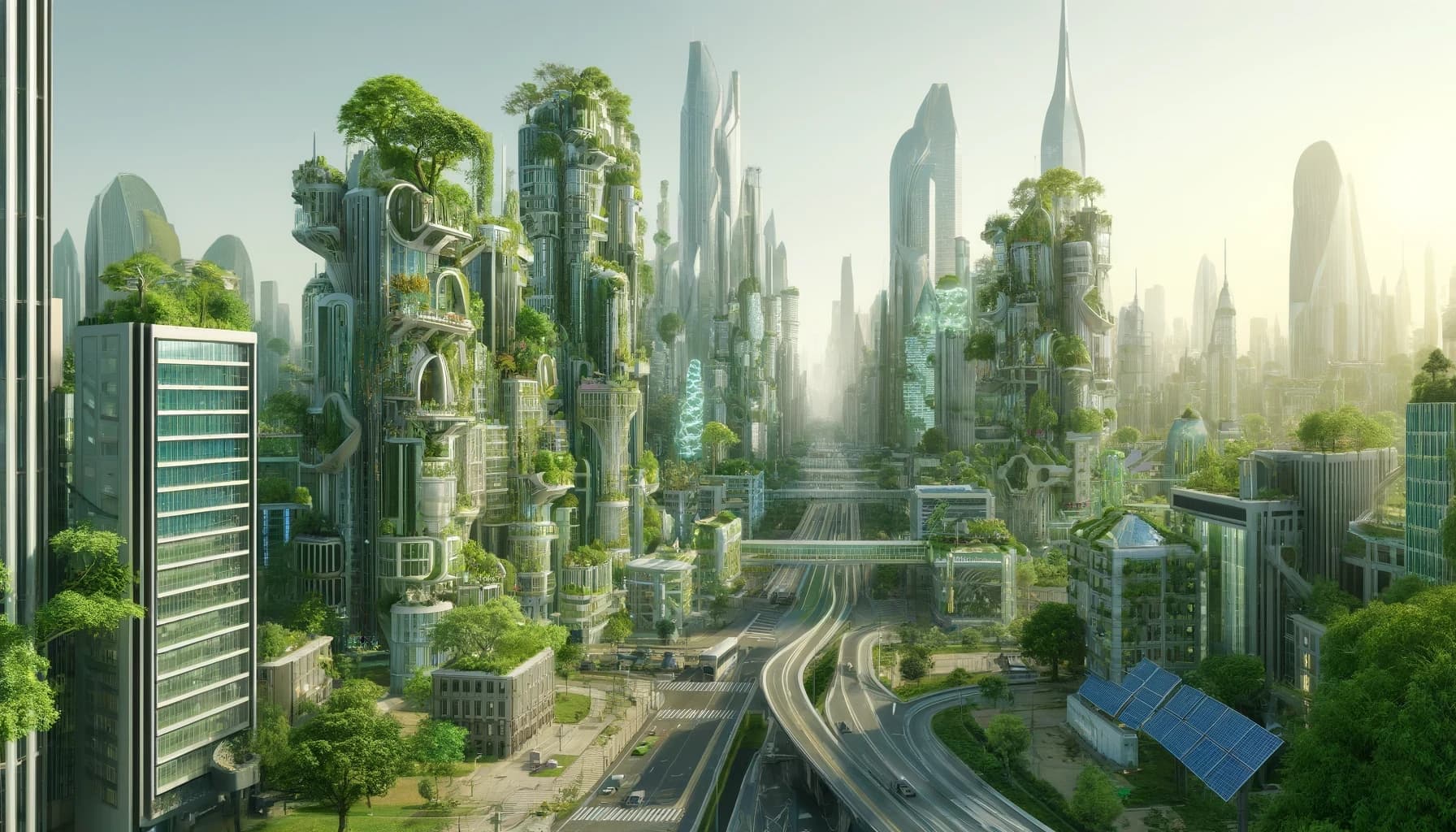
Biodesign in Green Architecture: Living Facades & Climate-Adaptive Materials
Live Registration
BATCH #24
03Seats Left
92% Booked
Registration Closed
Program Syllabus
Module 1
About This Course
This 3-day international workshop explores how biodesign can transform green architecture through living facades and climate-adaptive materials. Combining theory, case studies, and AI-based hands-on sessions (Google Colab/Jupyter), participants will learn to design and simulate climate-responsive building systems, integrating insights from architecture, biology, and technology for sustainable, resilient urban environments.
Module 2
Aim
To introduce participants to biodesign principles in green architecture and enable them to conceptualize and simulate living facades and climate-adaptive materials using AI tools for climate-resilient, sustainable building design.
Module 3
Workshop Objectives
-
Introduce biodesign principles for green, climate-resilient architecture.
-
Explore living facades, green roofs, and climate-adaptive materials for sustainable buildings.
-
Train participants to use AI tools (Google Colab/Jupyter) for climate-responsive design simulations.
-
Discuss case studies, challenges, and opportunities in implementing and scaling biodesign.
-
Encourage interdisciplinary collaboration across architecture, biology, materials science, and AI.
Module 4
Day 1 – Introduction to Biodesign & Living Facades
-
Overview of biodesign principles in green architecture
-
Role of living facades and climate-adaptive materials in sustainable design
-
Biomimicry: nature-inspired design strategies in architecture
-
Environmental benefits of living facades: energy efficiency, shading, and air quality
-
Hands-on Session: Designing a living facade concept using AI (Google Colab)
Module 5
Day 2 – Climate-Adaptive Materials & Applications
-
Types of climate-adaptive materials: responsive, regenerative, and sustainable options
-
Applications of living walls and green roofs in urban design
-
Self-healing, biodegradable, and bio-based materials for green buildings
-
Case studies: successful implementation of living facades and adaptable materials
-
Hands-on Session: Climate-responsive material simulation (Google Colab)
Module 6
Day 3 – Future Directions & Scaling Biodesign
-
Integrating living facades and adaptable materials into urban planning
-
Role of AI and data in optimizing climate-adaptive systems
-
Challenges and opportunities in scaling biodesign for large projects
-
Future of green architecture and interaction with green building certifications
-
Hands-on Session: Simulating climate adaptation in architectural design (Jupyter Notebook)
Module 7
Who Should Enrol?
-
UG/PG students in Architecture, Civil/Environmental Engineering, Urban Design, Landscape, Biology, Biotechnology, Materials Science, and related fields
-
PhD scholars & researchers in sustainable architecture, biomimicry, green materials, or climate-resilient design
-
Academicians interested in teaching or researching biodesign and green architecture
-
Professionals from architecture, urban planning, green building, and sustainability sectors
Module 8
Important Dates
Module 9
Registration Ends
12/17/2025
IST 4:30 PM
Module 10
Workshop Dates
12/17/2025 – 12/19/2025
IST 5: 30PM
Module 11
Workshop Outcomes
-
Grasp the fundamentals of biodesign, living facades, and climate-adaptive materials in green architecture.
-
Identify suitable living systems and adaptive materials for sustainable, climate-resilient buildings.
-
Use AI tools (Google Colab/Jupyter) to design and simulate climate-responsive façade and material concepts.
-
Interpret real-world case studies and translate insights into conceptual façade/architecture designs.
-
Recognize research and career pathways at the interface of architecture, biology, materials science, and AI.
Module 12
Fee Structure
Module 13
Student
₹1999 | $70
Module 14
Ph.D. Scholar / Researcher
₹2999 | $80
Module 15
Academician / Faculty
₹3999 | $90
Module 16
Industry Professional
₹5999 | $110
Module 17
What You’ll Gain
- Live & recorded sessions
- e-Certificate upon completion
- Post-workshop query support
- Hands-on learning experience
Module 18
Join Our Hall of Fame!
Take your research to the next level with NanoSchool.
Module 19
Publication Opportunity
Get published in a prestigious open-access journal.
Module 20
Centre of Excellence
Become part of an elite research community.
Module 21
Networking & Learning
Connect with global researchers and mentors.
Module 22
Global Recognition
Worth ₹20,000 / $1,000 in academic value.
Module 23
View All Feedbacks →
Need Help?
We’re here for you!
★★★★★
Prediction of Protein Structure Using AlphaFold: An Artificial Intelligence (AI) Program
Antonio Mauceri • ★★★★★
Prediction of Protein Structure Using AlphaFold: An Artificial Intelligence (AI) Program
Liam Cassidy • ★★★★★
The Green NanoSynth Workshop: Sustainable Synthesis of NiO Nanoparticles and Renewable Hydrogen Production from Bioethanol
Pushpender Kumar Sharma • ★★★★★
AI for Environmental Monitoring and Sustainablility
Mladen Kulev • View All Feedbacks →
